
Comfortable Dentures in Dublin
Dentures, also referred to as false teeth or prosthetic teeth, are made of acrylic, metal or nylon and they are created to fit your mouth and gums. They are a non-invasive tooth replacement option to replace lost or missing teeth, with physical, functional and psychological benefits.
They are a way of resolving problems with chewing, thus maintaining the healthy diet patients need. They will look and feel like your natural teeth, with artificial teeth designed to restore appearance and function, making a denture wearer appear to have all their own natural teeth and improving confidence and self esteem!
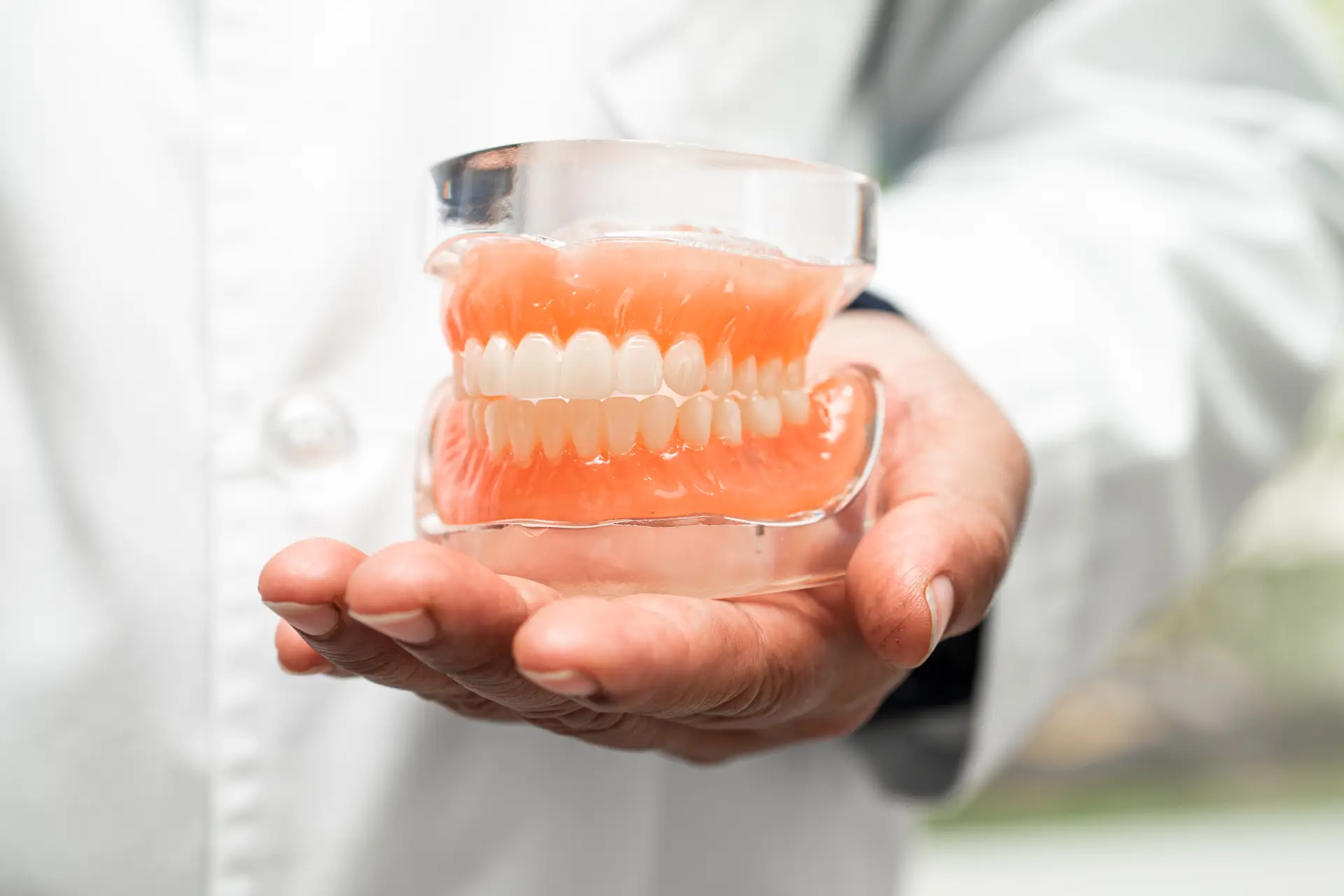
What types of dentures are available?
Depending on your number of teeth missing and your oral health habits, you will need one or another. Full dentures, also called a complete denture, replace an entire arch of missing teeth and rest on the gums for support. Partial dentures are used when multiple teeth are missing and are made to fit around remaining teeth; clasps can secure them around remaining natural teeth to improve stability and help prevent shifting. Come to visit us at College Gate Dental Clinic, and we will assess you and recommend you the best option:
- Complete. They are used to replace the full row of teeth on your upper or lower jaw, or both upper and lower. If you have no healthy teeth left, this is the best option.
- Partial. They are usually removable dentures that replace some of your teeth but not all of them, preserving the placement of the remaining teeth in your mouth.
- Implant-supported dentures. The implants are attached to your jawbone, then the denture clicks onto the head of the implant. They are more permanent.
Who is suitable for dentures for missing teeth?
They are usually more effective for those missing many teeth from the upper and lower gums. Immediate dentures can be an option after extractions, acting as temporary replacement dentures while your mouth heals before the final denture is made. These are inserted immediately after tooth removal, allowing you to avoid being without teeth, whereas conventional dentures are fitted only after the gums have healed over several months. Implant-supported dentures are designed for patients who want their dentures fixed in place; unlike traditional dentures or removable dentures, implant retained dentures offer more stability, while implant retained options that are non-removable are often described as permanent dentures for suitable patients.
Depending on your case and restoration needs, we will make you a recommendation.
How long do dentures last?
Well looked-after dentures, removed at night, will last up to 10 years easily. Major changes in your body can influence the fit of your dentures because the jaw bone, underlying bone, and bone and gum ridges change over time. Gum ridges can also shrink, which may mean new dentures or immediate dentures need relining or replacement sooner, while conventional dentures are usually more stable once fitted after healing. A poor fit can cause sore spots or put too much pressure and excess pressure on oral tissues. That’s why regular check-ups are also important.
Alternatives to dentures
Dental implants are artificial tooth roots fused into your jaw, and they act as a full replacement on a tooth. Implant-supported dentures, also known as permanent or hybrid dentures, are non-removable, require professional cleaning, and can suit patients who want more stability than traditional options.
Dental bridges bridge the gaps between teeth. They utilize crowns to fix the adjacent teeth to where the gap is. Traditional dentures remain a removable appliances option for broader tooth replacement needs.
What are the pros and cons of getting dentures?
- Dentures are an aesthetically pleasing way to restore full sets of teeth.
- They are easy to maintain, as they can be cleaned in or out of the mouth.
- They don’t require surgical procedure.
- They are cost-effective.
Also to consider!
- They need to be replaced over time.
- They usually need adjustments over time.
Questions about Dentures?
What are dentures made of?
They are usually made from acrylic resin or a combination of metal and resin. In fact, most dentures are made from acrylic dentures or metal-based designs, with durable resin and chrome cobalt among the common material choices. There are dentures made of other materials, but they aren’t as durable.
What kind of dentist does dentures?
Most dentists do dentures, but if there is an especially difficult case, they call the prosthodontist, who works directly with dentures, making and fitting them.
How long do dentures last?
They usually last between 5-7 years and they require adjustments and replacement over time, as they stain and wear down. If you are wondering how much do dentures vary in price, a full set may start from about €900, with €450 for the upper jaw and €450 for the lower jaw, while partials can range from €250-€450 in acrylic or €900-€1100 in cobalt chrome, so dentures cost depends on the type and materials used.
How to clean false teeth?
They can be cleaned with a special solution sold in the pharmacy or supermarket or simply with a mix of vinegar and warm water in equal parts. You can use liquid soap as well. Use a soft-bristled toothbrush with a non-abrasive cleaner, as regular toothpaste can be too harsh and damage the surface.
Can dentures broken in half be repaired?
They cannot be repaired, but you can come to our clinics to replace them. An imperfect restoration can cause pain, so it’s not advisable.
How should dentures fit in your mouth?
They should sit against your teeth and mouth smoothly to enable you to suction into place. Bottom dentures should float along with the gum. Partial dentures should feel firm but easily removable. Speech may be affected during the first week, and new dentures may feel loose at first while the tongue learn to help stabilise them, with minor irritation also being common early on.
How should dentures be stored?
You should keep them in a sanitary solution or warm water to stay moist. But if they have mental attachments, you should consult your dentist for more details.
How to brush dentures?
Use a soft-bristled brush and brush in circles, removing plaque and food debris. There are special kinds of toothpaste for dentures that are usually highly recommended, so consult us, and we will assess you.
How long to make dentures?
It depends on the patient, but it usually takes between 4-6 visits before your dentist is ready. The lab will take around 30 days to create your denture, so anywhere between 6 weeks to 3 months.
Can you eat with dentures?
Yes, you can eat with them, as they are intended to replace real teeth; thus they can be used like that. However, they wear down more easily than natural teeth, so avoid hard foods such as steaks or toffees, and start with soft foods cut into small pieces, chewing slowly as you adjust.
How to whiten false teeth?
There are different methods but taking proper care and cleaning them well is the best way to keep them white. They cannot be whitened beyond cleaning off the surface stain. Call us and we will assess your case.
Where to fix my false teeth?
Call us at College Gate Dental Clinic, and we will take charge of the situation. If your case needs the intervention of a prosthodontist, we will make the necessary arrangements for you.
Can you sleep with false teeth?
It is highly recommended for you to take them out at night and set them in a solution to clean them. That will allow your gums to rest and breathe, and it also helps reduce fungal growth such as thrush.
What is the process in getting dentures?
Decay or infection may hinder the process, so the first thing to consider is addressing this issue. Any tooth decay or gum disease must be treated first to support healthy teeth and gums before denture treatment. Then the dentist takes measurements, makes a mould of your teeth and sends it to the laboratory to build the dentures. Once it is finished, some slight adjustments will be made if it doesn’t fit properly, to remove any discomfort they may cause. If extractions are needed, immediate dentures are temporary appliances placed straight after removal so you can maintain appearance and function while healing, before a final denture is made.
Other Treatments to Consider
Book Your Free Consultation for Braces Today!
At College Gate Dental, we believe in making dental care accessible and stress-free. Whether you’re due for a routine check-up, need a second opinion, or have questions about treatment options, we’re here to help!
Find Us
College Gate Dental is conveniently located at College Gate Clinic, 123 Ballymun Rd, Glasnevin, Dublin 9, D09W523, Ireland. We are easy to find, nestled in a vibrant area with ample parking and access to public transportation. Whether you’re coming by car or bus, our clinic is well-connected and ready to provide you with excellent dental care in a welcoming environment. We look forward to welcoming you!