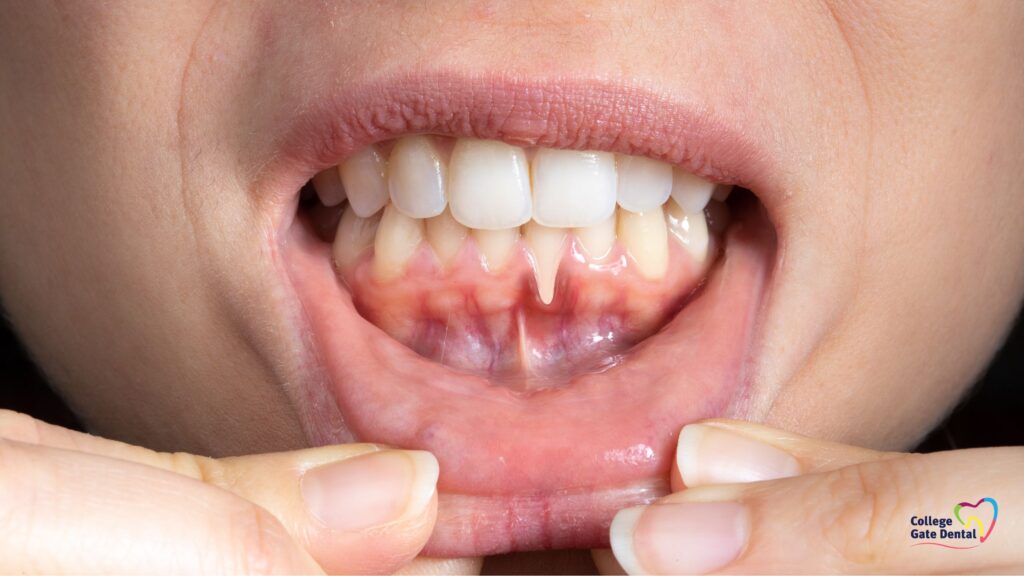
Gum recession is one of the most common dental concerns we see, yet many patients only seek help once sensitivity or visible root exposure becomes hard to ignore. This guide explains why gums recede, how to recognise the early signs, and what treatment options are available in Dublin – including what we offer at College Gate Dental Clinic in Glasnevin.
Quick answers: can receding gums grow back?
Gum recession is the gradual loss of gum tissue surrounding your teeth, exposing the tooth roots that should normally be protected. Once that soft tissue is gone, gum tissue cannot grow back on its own – the body simply does not regenerate lost gingival attachment under normal conditions.
That said, can receding gums be stopped? Yes. Non-surgical treatments such as deep cleaning, bite adjustment, and night guards can halt progression, while gum graft surgery can cover exposed root surfaces and rebuild a protective barrier. So if you are wondering whether it is too late to treat your gums – in the vast majority of cases, it is not.
Research suggests that roughly 78% of the general population has some degree of gum recession, so you are far from alone. At College Gate Dental Clinic, we assess gum recession at every stage and provide prevention, non-surgical care, and gum graft referrals where appropriate. Early detection of gum recession is crucial to prevent progression, so if you have noticed any changes, a prompt dental examination is worthwhile.
What is gum recession?
Gum recession occurs when the gum line gradually pulls away from the tooth, exposing more of the tooth or the root beneath the enamel. Healthy gums fit snugly around each tooth, sealing and protecting the supporting bone and root surfaces underneath.
Because gums recede slowly, many people do not notice until sensitivity appears or teeth look longer than before. As recession advances, pockets form between teeth and gums where plaque bacteria collect, raising the risk of gum disease and further bone loss. A notch can often be felt where the gum meets the tooth.
If left untreated, receding gums can lead to root decay, tooth mobility, and eventual tooth loss. Because missing gum tissue does not regenerate naturally, regular dental check up appointments are your best defence against letting mild gum recession become a serious problem.
Why do gums recede? (Common causes of gum recession)
Gum recession is usually driven by a combination of gum disease, mechanical trauma, and individual risk factors. The main causes include:
Periodontal disease – bacterial gum infections that destroy gum tissue and bone structures. Periodontal diseases are the main cause of gum recession.
Aggressive tooth brushing – scrubbing with hard bristles can physically wear away the gum margin over time. Gentle brushing helps prevent gum recession.
Poor oral hygiene – inadequate brushing and flossing allows plaque buildup, which leads to gum infection and recession.
Teeth grinding – grinding or clenching teeth can exert too much force on gums, causing recession. A custom night guard can protect against this.
Misaligned teeth – misaligned teeth can put excessive force on certain areas of gums, accelerating localised tissue loss.
Lifestyle and systemic factors also play a role. Tobacco use increases the risk of gum recession. Hormonal changes during pregnancy or menopause can make gums more vulnerable to recession. Some individuals are genetically predisposed to gum recession – studies suggest around 30% of the population may be genetically predisposed to gum disease regardless of how well they care for their teeth. Lip or tongue piercings, diabetes, and thin gum tissue phenotypes are additional risk factors.
Gum recession can occur at any age, including in younger adults after orthodontic treatment or where thin bone and over-brushing are present. Identifying the root cause in each patient is key to choosing the right gum recession treatment.
Early signs & symptoms of receding gums
Gum recession often develops so gradually that recognising early signs makes a real difference in keeping treatment simple. Symptoms of receding gums include tooth sensitivity and visible roots. Watch for:
- Increased tooth sensitivity to hot, cold, or sweet foods
- Teeth may appear longer due to gum recession
- A notch or step felt at the gum line
- Exposed root surfaces that look yellower than surrounding enamel
- Gums may become red, inflamed, or painful
- Bleeding when you brush your teeth or floss
- Recurring bad breath
More advanced warning signs include loose teeth, new gaps between teeth, or a change in how your bite fits together. If you notice any of these, arrange a dental examination promptly rather than waiting for discomfort to worsen.
How is gum recession diagnosed at the dental clinic?
Diagnosis begins with a full dental and medical history – your dentist will ask about symptoms, brushing habits, smoking, teeth grinding, and any previous gum disease. At College Gate Dental Clinic, a typical gum assessment includes visual inspection of the gum line, gentle probing to measure pocket depths, and noting where gums have receded.
Dental X-rays help assess bone levels, detect bone loss, and confirm whether root surfaces are exposed below the gum line. The dentist or dental hygienist will also evaluate plaque and tartar levels, tooth alignment, and any signs of clenching. Findings are used to stage the severity of gum recession and decide whether treatment can be managed in general practice or requires referral to a gum specialist. Regular dental visits are important for detecting early signs of recession before damage becomes extensive.
Treatment options for receding gums
While receding gums grow back is not something that happens naturally, several treatment options can stop recession, reduce sensitivity, and protect exposed root surfaces.
Non-surgical options:
Scaling and root planing – this deep cleaning removes plaque and tartar buildup from below the gum line. Deep cleaning can treat mild to moderate cases caused by gum disease.
Professional dental cleaning and oral hygiene instruction to address poor oral hygiene
Desensitising agents and fluoride toothpaste application for sensitivity
Cosmetic bonding to cover small areas of exposed root
Bite-related options:
Occlusal adjustment where bite forces contribute to recession
Custom night guards for patients who grind – wearing a night guard can protect gums from grinding or clenching teeth
Surgical treatment for advanced cases:
Gum graft surgery to cover exposed tooth roots with new graft tissue
The pinhole surgical technique – a minimally invasive option that repositions existing soft tissue without incisions
Regenerative surgical procedures where bone supporting the teeth needs rebuilding
Gum surgery may be necessary for severe gum recession cases. The choice depends on the depth and width of the affected gum tissue, the presence of active gum disease, and tooth stability. At College Gate, patients receive a personalised plan, and where complex surgical procedures are needed, we arrange referral to an appropriate specialist.
Antimicrobial mouthwash can help reduce harmful bacteria after treatment and during recovery. An antibacterial mouthwash may also be recommended as part of ongoing home care.
Gum graft surgery: what to expect
Gum graft surgery is designed to cover exposed root surfaces, thicken thin gum tissue, and prevent further recession. The main graft types include:
Connective tissue graft – tissue taken from beneath the surface of the roof of the mouth (the gold standard, with complete root coverage rates around 80%)
Free gingival graft – full-thickness tissue placed to increase the zone of protective keratinised gum
Donor or collagen materials – an alternative that avoids harvesting from the palate
A typical appointment involves local anaesthetic, root planing of the exposed root, placement and suturing of the graft, and sometimes a protective dressing. Recovery involves mild discomfort managed with pain relief, a soft diet for several days, and avoiding brushing the graft site until advised. Follow-up visits monitor healing. Long-term success depends on controlling the original cause – whether that is gum disease, aggressive brushing, or a bite issue.
Living with and recovering from gum recession treatment
Most patients return to normal activities quickly after non-surgical treatment such as scaling and root planing. After routine gum graft surgery, expect around one to two weeks before daily life feels fully comfortable again.
Post-treatment care includes using prescribed mouth rinses such as chlorhexidine short-term, avoiding smoking, and eating softer foods until the gums heal. To manage sensitivity, use desensitising toothpaste, avoid temperature extremes, and use a soft-bristled toothbrush. Attending follow-up appointments is essential to monitor healing and adjust your home care routine. Maintaining good oral hygiene can prevent gum recession from recurring, and with consistent professional maintenance, treated areas can remain stable for many years.
Preventing gum recession and protecting healthy gums
Prevention is far simpler and more comfortable than treating severe gum disease and advanced recession. Key home care steps:
Brush twice daily with fluoride toothpaste for gum health, using a soft-bristled toothbrush to avoid damaging gums
Use gentle circular motions – never scrub horizontally
Floss daily to remove plaque and prevent gum recession
Use an antimicrobial mouthwash to keep harmful bacteria in check
Lifestyle changes that support gum health include stopping smoking, limiting sugary and acidic drinks, and maintaining a healthy diet. If you have diabetes, work with your GP to keep blood sugar well controlled.
Visit your dentist at least twice a year for check-ups. Regular dental cleanings help prevent gum disease and recession by catching plaque and tartar before they cause damage. Routine dental check-ups and hygienist visits – commonly every six to twelve months – are your strongest tool to prevent gum recession and catch early signs before gums recede further. If you have a family history of gum disease or notice any warning signs, seek advice promptly so that small issues do not progress to the point where gum graft surgery is needed.
Gum recession treatment at College Gate Dental Clinic, Glasnevin
College Gate Dental Clinic is a long-established multidisciplinary dental clinic in Glasnevin, Dublin, with over 20 years of experience diagnosing and managing gum disease and gum recession. Our services relevant to gum recession include:
Comprehensive gum assessments and detailed oral hygiene instruction
Scaling and root planing by an experienced dental hygienist
Desensitising and preventive treatments for tooth sensitivity
Bite and grinding assessments with custom night guards
Referral pathways for advanced gum graft or regenerative gum surgery
We understand that dental anxiety and cost concerns can delay treatment. That is why we offer evening and weekend appointments, affordable payment plans with no deposit, and free on-site parking.
If you have noticed sensitivity, bleeding gums, bad breath, or teeth that look longer than they used to, do not wait for the problem to worsen. Contact College Gate Dental Clinic by phone, online form, or in person to book your assessment. Early action keeps gum recession treatment simpler, more predictable, and more comfortable – and helps you stop receding gums before they progress.